How to Choose the Best Web Hosting Provider (Complete Beginner's Guide)
Choosing the best web hosting provider is one of the most important decisions when creating a website. Whether you want to start a personal blog, an online store, or a business website, your hosting company will affect your website’s speed, security, and reliability.
Many beginners choose the cheapest hosting plan without understanding what they are buying. This often leads to slow websites, downtime, and poor customer support.
In this guide, you will learn how to choose the best web hosting provider and what features you should always check before purchasing a hosting plan.
What Is a Web Hosting Provider?
A web hosting provider is a company that stores your website files on powerful servers and makes your website available on the internet.
Without a hosting provider, visitors cannot access your website.
A good hosting provider keeps your website online 24/7, protects your data, and helps your website load quickly.
Understand Your Website Needs
Before comparing hosting companies, first understand your own requirements.
Ask yourself these questions:
- Is this a personal blog?
- Is it a business website?
- Will you build an online store?
- How much traffic do you expect?
- Will you use WordPress?
Your answers will help you choose the right hosting plan instead of paying for features you don’t need.
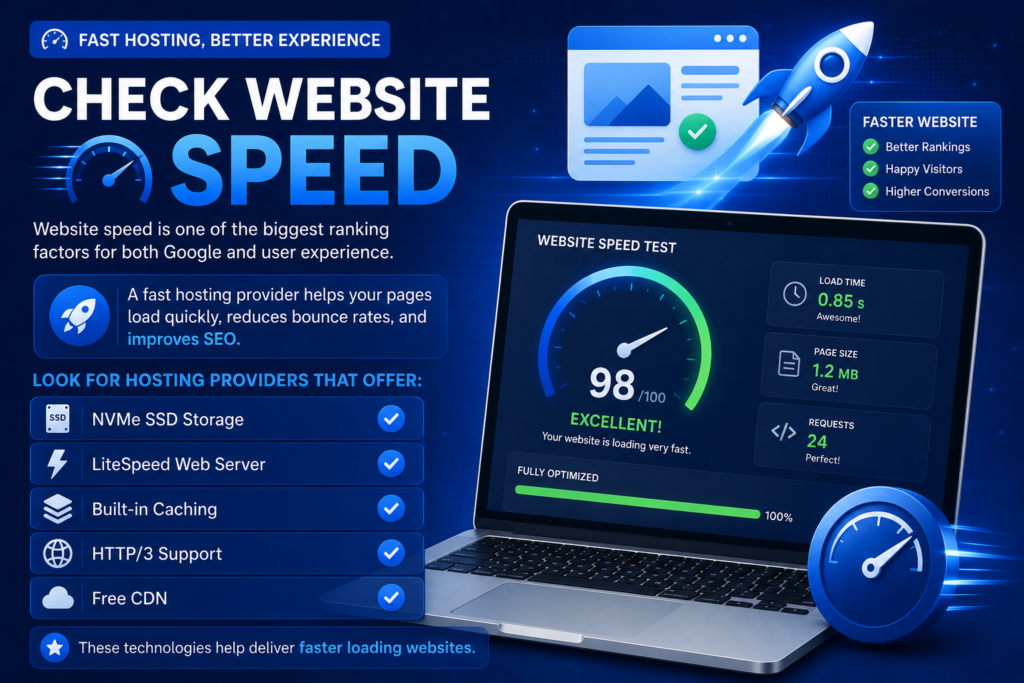
Check Website Speed
Website speed is one of the biggest ranking factors for both Google and user experience.
A fast hosting provider helps your pages load quickly, reduces bounce rates, and improves SEO.
Look for hosting providers that offer:
- NVMe SSD Storage
- LiteSpeed Web Server
- Built-in Caching
- HTTP/3 Support
- Free CDN
These technologies help deliver faster loading websites.
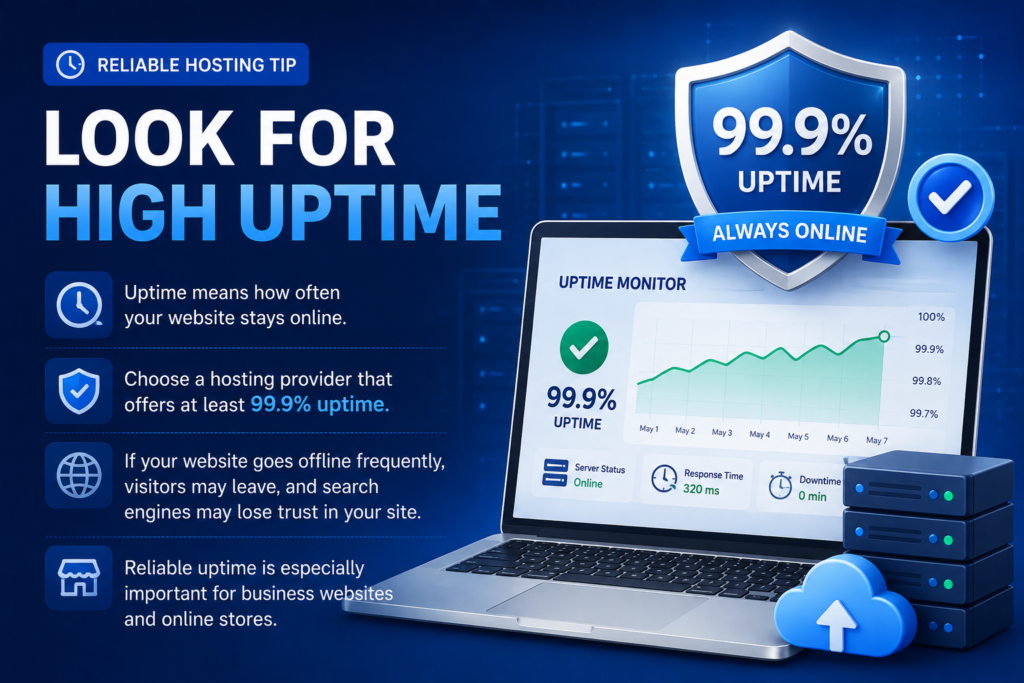
Look for High Uptime
Uptime means how often your website stays online.
Choose a hosting provider that offers at least 99.9% uptime.
If your website goes offline frequently, visitors may leave, and search engines may lose trust in your site.
Reliable uptime is especially important for business websites and online stores.
Compare Security Features
Website security should never be ignored.
A reliable web hosting provider should include:
- Free SSL Certificate
- Daily Backups
- Malware Protection
- DDoS Protection
- Firewall
- Two-Factor Authentication (if available)
These features help keep your website and customer data safe.
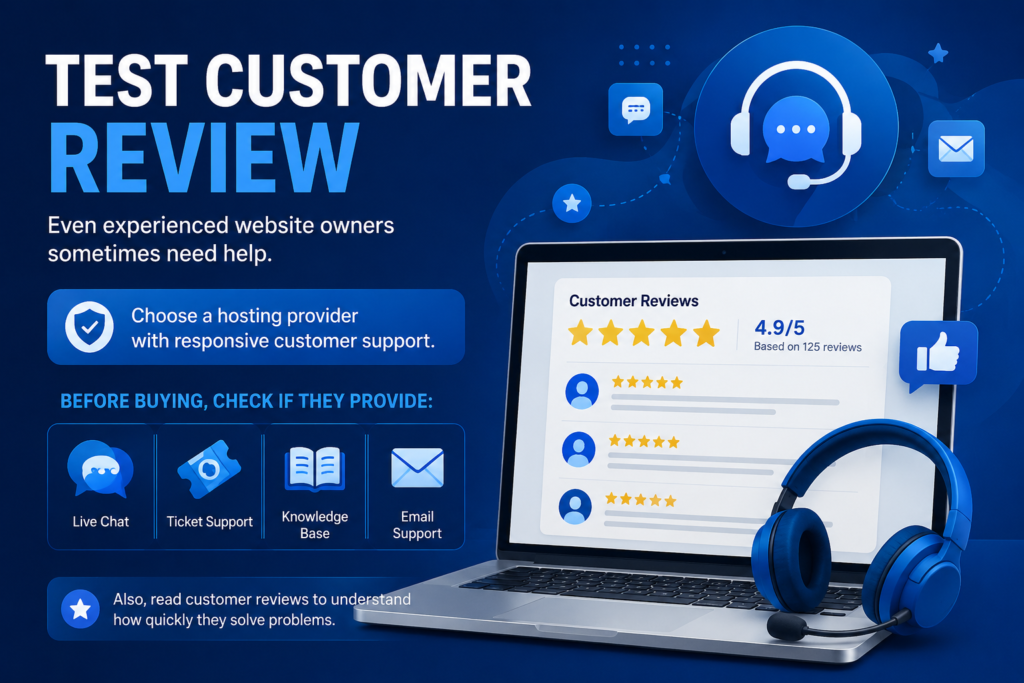
Test Customer Support
Even experienced website owners sometimes need help.
Choose a hosting provider with responsive customer support.
Before buying, check if they provide:
- Live Chat
- Ticket Support
- Knowledge Base
- Email Support
Also, read customer reviews to understand how quickly they solve problems.
Choose the Right Hosting Type
Different websites require different hosting solutions.
Shared Hosting
Best for:
- Beginners
- Small businesses
- Personal blogs
WordPress Hosting
Ideal for WordPress websites with optimized performance.
VPS Hosting
Suitable for websites with higher traffic and more control requirements.
Cloud Hosting
Best for websites that need better scalability and higher availability.
Check Backup Options
Backups can save your website if something goes wrong.
A good hosting provider should offer automatic backups so you can restore your website easily after accidental changes or technical issues.
Read Customer Reviews
Before choosing any hosting company, spend some time reading genuine customer reviews.
Pay attention to comments about:
- Speed
- Uptime
- Support quality
- Billing experience
- Server stability
Do not rely only on advertisements.
Compare Pricing Carefully
Low prices can be attractive, but always check what is included.
Some hosting providers advertise very low introductory prices but charge much higher renewal fees later.
Always compare:
- Renewal price
- Free SSL
- Free Migration
- Daily Backups
- Email Accounts
- Control Panel
- Storage
- Bandwidth
Understanding the complete pricing helps you avoid unexpected costs.
Look for Easy Scalability
Low prices can be attractive, but always check what is included.
Some hosting providers advertise very low introductory prices but charge much higher renewal fees later.
Always compare:
- Renewal price
- Free SSL
- Free Migration
- Daily Backups
- Email Accounts
- Control Panel
- Storage
- Bandwidth
Understanding the complete pricing helps you avoid unexpected costs.
Check the Control Panel
A user-friendly control panel makes website management much easier.
Popular control panels include:
- cPanel
- DirectAdmin
- Plesk
For beginners, cPanel remains one of the easiest options to manage websites, emails, databases, and backups.
Common Mistakes to Avoid
Many beginners make these mistakes when choosing web hosting:
- Buying the cheapest plan without comparing features.
- Ignoring uptime guarantees.
- Not checking customer support quality.
- Forgetting about renewal prices.
- Choosing hosting without backups.
- Ignoring website security features.
Avoiding these mistakes can save both time and money.
Final Thoughts
Choosing the best web hosting provider is not only about finding the lowest price. It is about selecting a company that offers speed, security, reliability, excellent support, and room for future growth.
Take time to compare different providers, review their features, and choose a hosting plan that matches your website’s goals. A reliable hosting provider creates a strong foundation for better performance, improved SEO, and long-term success.
Final recommendation
How do I choose the best web hosting provider?
Which hosting is best for beginners?
Does web hosting affect SEO?
Should I choose the cheapest hosting provider?
Need Other Article?
How Much RAM Does a Website Need? 7 Best Practices How Much RAM Does a Website Need? A Practical Hosting […]
Can You Create a Business Email Without a Website? Can You Create a Business Email Without a Website Yes, you […]